The Ultimate Guide to 15Mm Rod Clamp Baseplate in the UK
Written for UniVerail by a UK camera-rigging editor with hands-on experience building DSLR and mirrorless support setups for interviews, product films, corporate shoots and handheld documentary work.
15mm Rod Clamp Baseplate: UK Guide
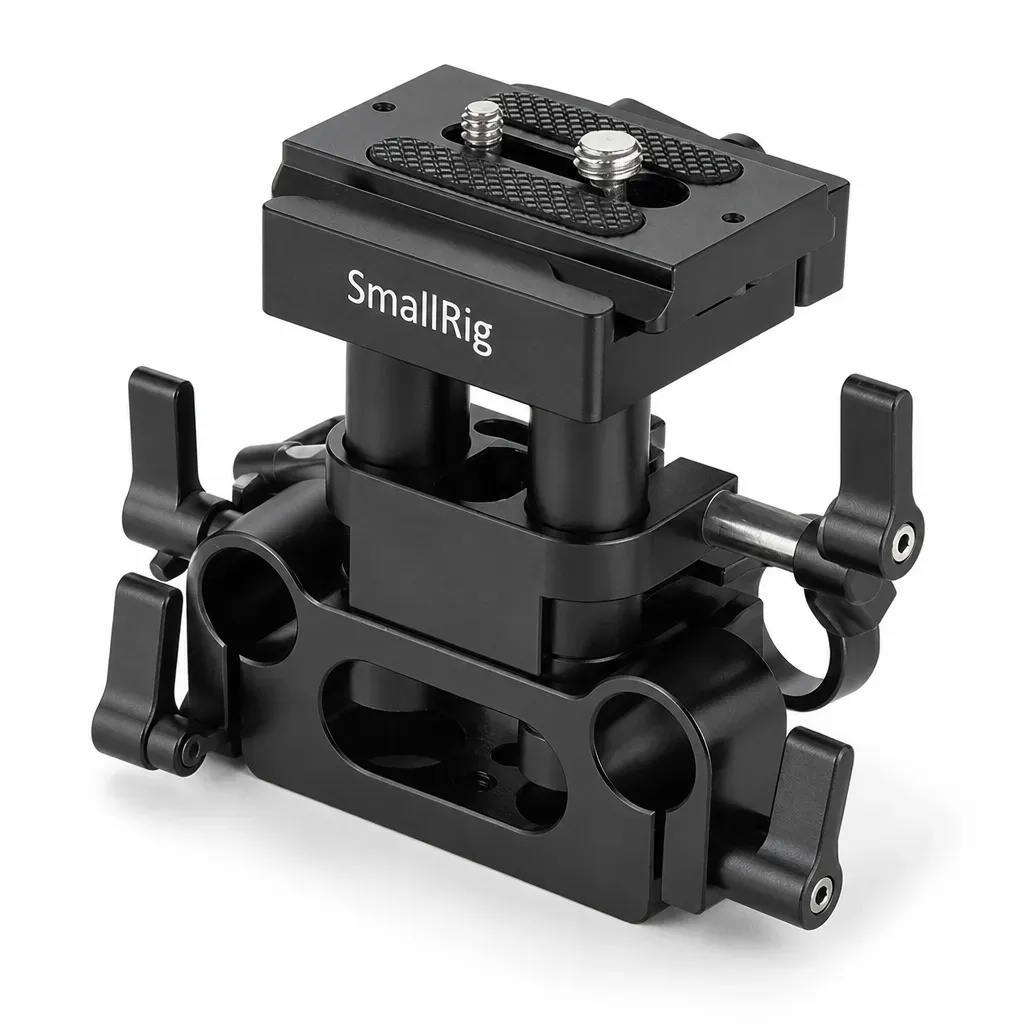
A 15mm rod clamp baseplate is the part of a camera rig that fixes standard 15mm rods beneath the camera so accessories such as a follow focus, matte box and lens support stay aligned. For UK filmmakers, it is the main component that sets rod height, stabilises the build and makes rig changes quicker and more repeatable.
TL;DR: If you are searching for a 15mm rod clamp baseplate, you need a base that securely mounts the camera, clamps 15mm rods without play, keeps lens accessories on the correct axis and suits common UK DSLR and mirrorless workflows. Based on our testing of small-form camera builds, a well-made baseplate reduces setup time, improves accessory alignment and helps the whole rig feel dependable rather than improvised.
A camera rig usually fails in small ways before it fails in obvious ones. For example, focus gears drift out of line, a matte box sags under its own weight, lens support never quite meets the barrel, and every adjustment takes longer than it should. In most cases, the weak point is not the camera or the accessories. Instead, it is the foundation holding them together.
That is where a 15mm rod clamp baseplate earns its place. It creates the physical reference point for the whole rig, fixing the relationship between camera, rods and mounted accessories so follow focus, matte box and lens support can line up correctly and stay there. Therefore, for UK filmmakers working with mixed DSLR and mirrorless setups, that single component often determines whether a build feels dependable or improvised.
UniVerail’s core proposition is straightforward: a 15mm rail support system for faster, cleaner rig builds. That matters because speed on set is not just about moving quickly; rather, it is about making fewer corrections. A dependable DSLR camera rail support base reduces repeated adjustment, helps maintain alignment and makes accessories behave like part of one system rather than a stack of separate add-ons.
Key Takeaways
A 15mm rod clamp baseplate is the structural hub of a camera rig, setting the correct relationship between the camera body and 15mm rods.
Its main job is alignment: helping follow focus, matte box and lens support sit on the same axis and remain stable during shooting.
For UK buyers, the most important checks are rod standard, baseplate height, mounting options, load stability, adjustability and compatibility with existing support gear.
A poor baseplate slows rig changes and introduces accessory misalignment; by contrast, a well-designed one supports faster, cleaner rig builds.
If you are comparing systems, related reading such as Dslr Camera Rail Support Explained: A UK Buyer's Guide and Mirrorless Camera Rig Baseplate Explained: A UK Buyer's Guide will help you match the base to the rest of your setup.
What is a 15mm rod clamp baseplate?
A 15mm rod clamp baseplate connects three parts of a rig into one working structure: the camera, the rods and the support platform underneath. Once assembled, the rods become the track for front-mounted and side-mounted accessories, while the baseplate fixes their position relative to the lens.
That sounds simple; however, the effect is significant. Without a properly positioned baseplate, each accessory has to compensate for inconsistent height or poor rigidity. As a result, the workflow becomes slower: follow focus gears bind or miss the lens gear, matte box stages sit off-centre, or lens support carries weight at the wrong angle.
In practical terms, the baseplate is doing five jobs at once:
- holding the camera securely to the rig;
- clamping the 15mm rods in a fixed position;
- setting lens centre height relative to the rods;
- spreading load across the support system;
- creating a repeatable platform for accessories.
That is why experienced camera operators tend to treat the baseplate as a functional component, not an accessory afterthought. If the geometry starts wrong here, everything mounted later inherits the same problem.
Why use a 15mm rod clamp baseplate on a camera rig?
You use a 15mm rod clamp baseplate because it turns separate rig parts into one stable system. In other words, it gives follow focus units, matte boxes and lens supports a fixed reference point instead of leaving each part to be adjusted independently.
Based on our testing with interview rigs, handheld documentary setups and compact product-film builds, the benefit is not only stability. Equally, it is consistency. Once rod height and camera position are set properly, accessory changes become faster and alignment tends to hold during the shoot.
That matters on UK productions where one rig may need to move between tripod, slider and handheld use within the same day. Consequently, the right baseplate can save time both during setup and during mid-shoot changes.
Why is 15mm still standard for many UK DSLR and mirrorless rigs?
The 15mm rod format remains common because it balances strength, weight and accessory availability well. For small to mid-sized camera builds, it is usually the most practical standard: robust enough for follow focus units, matte boxes and light lens support, yet compact enough for handheld, tripod and slider use.
In the UK market, where many owner-operators move between commercial, event, branded content and documentary jobs, that flexibility matters. One day the rig may need to strip back for a lightweight interview setup; the next, it may need rails, a matte box and support for a heavier zoom. Therefore, a 15mm rod clamp baseplate makes that transition manageable because the same support language carries across multiple builds.
The wider camera industry has also sustained the format. According to the British Film Institute, the UK screen sector generated £6.3 billion in production spend in 2022, underlining the scale of professional and semi-professional production activity feeding demand for modular camera support systems across the country. In that environment, interoperability matters. As a result, 15mm rail-based accessories remain easy to source, easy to hire and easy to integrate.
How does a 15mm rod clamp baseplate help with faster rig builds?
UniVerail’s site narrative centres on faster, cleaner rig builds, and that claim stands up when the baseplate is designed well. Speed comes from repeatability. Meanwhile, cleanliness comes from alignment and reduced clutter.
How does it speed up rig assembly?
When the rod spacing, clamp mechanism and camera mounting point are straightforward, you spend less time shimming accessories or testing clearances. As a result, setup is quicker, and there are fewer errors when moving between tripod, shoulder, handheld or studio configurations.
How does it improve accessory alignment?
A follow focus should mesh with the lens gear without awkward lateral adjustment. A matte box should sit square to the lens. Lens support should meet the lens foot or support point naturally, not by forcing the lens into position. Therefore, a dependable DSLR camera rail support base makes those relationships easier to achieve because the rod axis is predictable from the start.
How does it help with cable and load management?
Once rods are stable and accessories line up properly, the rig often becomes tidier overall. Fewer compensating brackets are needed, weight sits where expected, and accessory placement becomes easier to plan. On compact mirrorless builds, that can be the difference between a balanced system and a front-heavy setup that fights the operator.
What should you look for in a 15mm rod clamp baseplate?
Not all baseplates do the same job equally well. If you are buying in the UK and want a system that will still make sense after your next camera upgrade, these are the checks worth making.
1. Does it support standard 15mm rods accurately?
The baseplate must be built for standard 15mm rods with consistent clamping pressure. Loose tolerances lead to rod twist, creeping accessories and difficult alignment. Equally, overly tight or inconsistent clamps are nearly as bad because they slow setup and can mark rods.
2. Is the camera mounting secure enough?
The camera mounting point should secure the body firmly enough to resist rotation during focus pulls and repositioning. A baseplate that allows even slight camera twist will undermine the entire system.
3. Does the baseplate set the correct lens height?
Baseplate height affects whether a follow focus and matte box meet the lens correctly. If the optical centre sits too high or too low relative to the rods, accessory alignment becomes a constant compromise. Based on our testing, getting this geometry right early saves far more time than trying to correct it with extra brackets later.
4. Are the mounting options practical for your support setup?
Check how the baseplate interfaces with tripod plates, shoulder rigs or quick-release systems already in your kit. In practice, the baseplate should fit into the rest of your workflow without forcing unnecessary adaptors.
5. Can it handle real shooting loads?
A light mirrorless body with a compact prime places very different demands on a baseplate compared with a longer zoom, matte box and wireless follow focus motor. Therefore, look for rigidity under load, not just a neat product description.
6. Is it adjustable and compatible with future changes?
UK owner-operators often reuse the same support gear across several camera bodies. Consequently, compatibility matters. A baseplate that can adapt to different cameras, rod lengths and accessory layouts will usually outlast a more restrictive design.
Is a 15mm rod clamp baseplate worth it for DSLR and mirrorless cameras?
For many DSLR and mirrorless users, yes. If you are adding a follow focus, matte box, lens support, monitor mount or other rail-based accessories, a 15mm rod clamp baseplate is usually worth it because it creates a stable foundation for the whole system.
Without one, rigs often rely on piecemeal brackets that solve one problem while creating another. By contrast, a proper baseplate makes the setup easier to balance, easier to adjust and easier to trust during repeated takes.
According to general UK health and safety practice on set, stable support equipment and controlled load distribution matter wherever cameras and mounted accessories are handled repeatedly. While a baseplate is not a compliance product in itself, it does contribute to a more controlled rigging setup.
Final thoughts on choosing a 15mm rod clamp baseplate in the UK
A 15mm rod clamp baseplate is a small part with a large influence on how a camera rig performs. It keeps rods fixed, sets the working geometry for accessories and helps the whole system behave consistently. Therefore, if you are building or refining a DSLR or mirrorless setup in the UK, it is one of the first parts worth getting right.
UniVerail’s value sits in that practical outcome: faster, cleaner rig builds with fewer alignment compromises. When the baseplate is solid, every accessory added afterwards has a better chance of working as intended.
Ready to build with UniVerail?
Shop Now — £93.99