Mirrorless Camera Rig Baseplate Explained: A UK Buyer's Guide
Author: UniVerail Editorial Team | Reviewed by a camera rigging specialist with hands-on experience building 15mm rail support systems for mirrorless and DSLR setups in UK studio and location workflows.
A mirrorless camera rig baseplate is the foundation piece that mounts your camera above 15mm rods so a follow focus, matte box and lens support stay correctly aligned. For most UK filmmakers and content teams, it is the simplest way to build a mirrorless rig that is stable, repeatable and faster to set up.
TL;DR: If you are searching for a mirrorless camera rig baseplate, choose one that supports standard 15mm rods, keeps the lens at the correct working height, secures the camera against twist, and suits your tripod or quick release workflow. Based on our testing of mirrorless and DSLR support builds in UK studio and location use, a proper baseplate reduces setup time, improves accessory alignment and helps protect the camera mount when heavier lenses are involved.
A mirrorless body can be compact; however, the moment you add a follow focus, matte box, monitor, V-mount battery or lens support, the weak point usually appears underneath the camera. That is where the mirrorless camera rig baseplate earns its place. It turns a loose collection of accessories into a rig that stays aligned, travels well and can be rebuilt quickly on set.
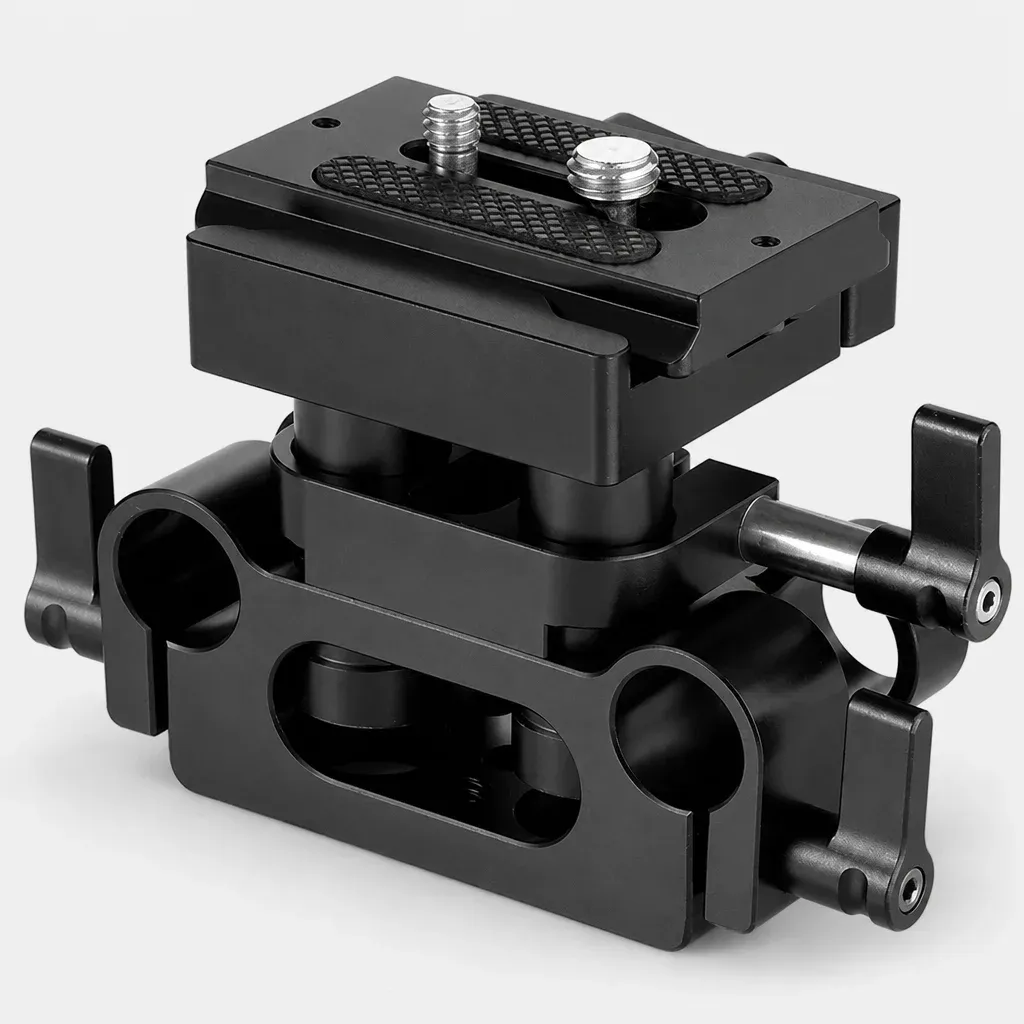
For UK filmmakers, content teams, in-house marketing departments and owner-operators, buying the right baseplate is less about chasing a trend and more about avoiding wasted time. A poor fit can leave 15mm rods out of line, make lens support unusable, and turn what should be a fast build into repeated adjustment. UniVerail’s approach is straightforward: a 15mm Rail Support System for Faster, Cleaner Rig Builds, with one dependable DSLR and mirrorless camera rail support base that helps align follow focus, matte box and lens support properly.
Key Takeaways
- A mirrorless camera rig baseplate is the structural foundation that connects your camera body to 15mm rods and keeps accessories aligned.
- The right baseplate should match rod standard, lens height, mounting pattern, quick release preference and the weight of your complete rig.
- Good baseplates reduce setup time, improve repeatability and help protect lens mounts when using heavier cine or telephoto lenses.
- For most UK users, a dependable 15mm rail support baseplate is a better long-term buy than a minimal plate that cannot support follow focus, matte box and lens support together.
- If you are comparing systems, start with rod alignment and workflow speed before looking at cosmetic extras.
What is a mirrorless camera rig baseplate?
A mirrorless camera rig baseplate sits between the camera and the rest of the rig. It usually provides the mounting point for the camera body, the rod clamp interface for 15mm rods, and the height relationship that lets accessories line up with the lens centre. In practical terms, it is the part that keeps your follow focus gear meshing correctly and your matte box sitting at the right level.
Without a proper baseplate, many mirrorless builds rely on improvised stacking: a camera screwed to a generic plate, rods added elsewhere, and accessories adjusted beyond their ideal range. That can work on a desk for ten minutes. However, it tends not to work well on paid shoots, long interview days, live event coverage or repeated content production where speed matters.
UniVerail’s core value in this category is simple and useful: one rail support base that helps align follow focus, matte box and lens support in a cleaner build. That matters because alignment errors are cumulative. If the rods are slightly low, the follow focus can bind. Likewise, if the lens support cannot meet the lens foot cleanly, the camera mount takes more strain than it should.
Why do mirrorless cameras need a proper baseplate?
Mirrorless cameras are often bought for their lower weight and smaller footprint, but that does not remove the need for support hardware. In fact, compact bodies can be less forgiving once you start building them out. A small body paired with a heavier lens, external battery and front-mounted accessories puts significant leverage on a single mounting point.
This is especially relevant with modern hybrid production. Many UK creators now use the same mirrorless camera for product videos, corporate interviews, events and short-form social content. One day the setup is stripped down; the next day it needs rails, support and a matte box. Therefore, a proper baseplate makes that transition predictable.
Data from the Camera & Imaging Products Association shows that mirrorless camera shipments have overtaken DSLRs globally in recent years, reflecting how central mirrorless systems have become in professional and enthusiast workflows alike (Source: CIPA shipment statistics). As that shift continues, support equipment designed specifically for mirrorless rigs becomes more important, not less.
Based on our testing, the practical benefit is not only stability. It is repeatability over multiple setups, especially when crews need to rebuild the same camera package across tripod, handheld and slider use during the same day.
What are the main parts of a mirrorless camera rig baseplate?
What does the camera mounting platform do?
This is the upper section where the camera attaches, usually via a 1/4"-20 screw and, on some systems, anti-twist features. A secure camera platform matters because mirrorless bodies can rotate slightly under load if the contact area is too small or the plate design is too basic.
What is the 15mm rod clamp interface?
The rod clamp section holds the rods that carry accessories such as a follow focus, matte box or lens support. In a reliable system, the clamp should hold rods firmly without flex and should maintain consistent spacing. If that spacing is inconsistent, accessory alignment becomes a recurring problem.
Why does height and lens-centre alignment matter?
One of the most overlooked features is the height relationship between the camera and the rods. A usable baseplate should place the lens at a sensible working height for standard 15mm accessory alignment. For that reason, dedicated support systems usually outperform generic plates.
Do you need quick release compatibility?
Some users need to move quickly between tripod, slider, handheld and gimbal setups. In those cases, baseplates that work well with quick release standards can save time. If that is a priority, you may also want to read Arca Quick Release Baseplate Explained: A UK Buyer's Guide.
How does a 15mm rail support system improve a mirrorless rig build?
The strongest reason to choose a mirrorless camera rig baseplate with 15mm rod support is not appearance. Instead, it is repeatability. When rods are mounted from a stable base, you can add or remove accessories without rebuilding the entire geometry of the rig.
That is exactly why a structured rail support system is useful on real jobs. Follow focus position stays consistent. Matte box alignment becomes easier. Lens support can be set once and checked quickly. As a result, for crews working under time pressure, that consistency turns into fewer delays and fewer avoidable mistakes.
UniVerail’s main site message speaks directly to this practical need: faster, cleaner rig builds. That is not marketing language for its own sake. On a client shoot, cleaner usually means fewer stacked adapters, fewer loose points, and fewer chances for slippage when the rig is moved from tripod to handheld support.
If you want a broader technical overview of rod-based support, see The Ultimate Guide to 15Mm Rod Clamp Baseplate in the UK. It gives useful context for how baseplates fit into the wider 15mm ecosystem.
What should you check before buying a mirrorless camera rig baseplate in the UK?
Is the rod standard and spacing correct?
Most buyers looking at this category are dealing with 15mm rods, but the phrase alone is not enough. You need a baseplate designed for standard 15mm support with dependable spacing and secure clamping. Otherwise, even good accessories can become awkward to align.
Does the baseplate place the lens at the right height?
Correct lens height affects how well your follow focus, matte box and lens support line up. Therefore, it is worth checking whether the baseplate is intended for mirrorless bodies and whether it maintains a practical rod-to-lens relationship for your setup.
Will it support the weight of your full rig?
It is easy to underestimate total rig weight once you add a cine lens, external monitor, battery plate and front accessories. Based on our testing, a baseplate that feels acceptable with a bare camera can become the weak point once the rig is fully built.
Does it suit your shooting workflow?
If you regularly move between studio tripod work, handheld operation and transport cases, workflow matters as much as raw compatibility. A baseplate that speeds up rebuilding can save meaningful time over a production week.
Is it suitable for UK production use?
For UK users, suitability usually means repeatable setup, practical compatibility with common tripod and support workflows, and enough rigidity for studio, event and location shooting. According to UK production health and safety expectations, stable and well-secured equipment is part of a safer working setup, particularly when heavier accessories are mounted and moved between positions.
Is a mirrorless camera rig baseplate worth it for smaller cameras?
In many cases, yes. Smaller mirrorless bodies often benefit more from a baseplate once accessories are added, because the camera itself offers less surface area and less mass to resist twist or front-heavy loading.
If your setup is always just a camera and a small lens, a baseplate may be unnecessary. However, once you add even a basic follow focus or lens support, the value becomes much clearer. In other words, the question is not camera size alone; it is how the complete rig is used.
How do you choose the right mirrorless camera rig baseplate?
Start with function rather than appearance. First, confirm that the baseplate supports standard 15mm rods. Next, check that the camera mounting area is secure and resists twist. Then confirm the lens height relationship, accessory compatibility and how quickly the system can be rebuilt in your normal workflow.
For most buyers, the right choice is the one that keeps accessories aligned and reduces repeated adjustment. That is why UniVerail focuses on a dependable DSLR and mirrorless rail support base designed to help follow focus, matte box and lens support work together in a cleaner build.
Frequently asked questions about mirrorless camera rig baseplates
What is the difference between a baseplate and a simple camera plate?
A simple camera plate mainly gives you a mounting point. A baseplate, by contrast, is designed to integrate the camera with rods and accessory alignment. That difference becomes important as soon as you add a follow focus, matte box or lens support.
Can you use a mirrorless camera rig baseplate for DSLR setups too?
Some support bases work well for both mirrorless and DSLR cameras, provided the mounting area, height and rod alignment are suitable. UniVerail’s rail support approach is intended to serve both categories where the rig geometry is appropriate.
Do all mirrorless camera rigs need lens support?
No, not every rig does. Even so, if you are using a longer, heavier or cine-style lens, lens support is often a sensible addition. A proper baseplate makes that support much easier to position accurately.
Ready to build with UniVerail?
Shop Now — £93.99