Dslr Camera Rail Support Explained: A UK Buyer's Guide
By the UniVerail editorial team | UK camera support specialists focused on 15mm rail support systems for practical rig building.
TL;DR: A DSLR camera rail support is a 15mm rod-based base system that keeps a camera, follow focus, matte box and lens support aligned in one repeatable setup. For most UK filmmakers, it matters when using heavier lenses, rod-mounted accessories or rebuildable tripod and shoulder rigs, because it improves alignment, reduces setup time and helps protect lens mounts under load.
Key Takeaways
A DSLR camera rail support system gives you a fixed, repeatable way to align a follow focus, matte box and lens support on standard 15mm rods.
For most UK filmmakers, the right base should match rod standard, lens height, camera weight, quick-release needs and the type of shooting you do most often.
A dependable 15mm rail support system can reduce setup time, improve lens support on heavier glass and make a rig cleaner to balance on tripods, sliders and shoulder setups.
Before buying, check centre height, rod spacing, material quality, clamp design and whether the unit works with your existing plates, cages and tripod heads.
What Is a DSLR Camera Rail Support?
A DSLR camera rail support is the base of a 15mm rod system that holds the camera at a fixed height and alignment so accessories such as a follow focus, matte box and lens support can mount correctly. In short, it gives DSLR and hybrid video rigs a shared mechanical reference point, which is why it remains useful across UK filmmaking, education, events and commercial production.
A camera rig often looks fine until you try to mount a follow focus, add a matte box and then support a longer lens. At that point, small misalignments start to cost time. Therefore, a DSLR camera rail support system solves the problem by giving accessories one stable reference point, so the rig builds faster and stays consistent from job to job.
At UniVerail, the design brief is simple: 15mm Rail Support System for Faster, Cleaner Rig Builds. The practical advantage is equally clear. A well-made support base lets you align follow focus, matte box and lens support with one dependable DSLR camera rail support base, rather than correcting each part separately every time you rebuild the rig.
This guide explains what DSLR camera rail support actually does, who needs it, how to assess compatibility and what to look for if you are buying in the UK. As a result, it stays focused on the base of the system, because that is the part that determines whether the rest of the rig behaves properly.
What Does a DSLR Camera Rail Support Actually Do?
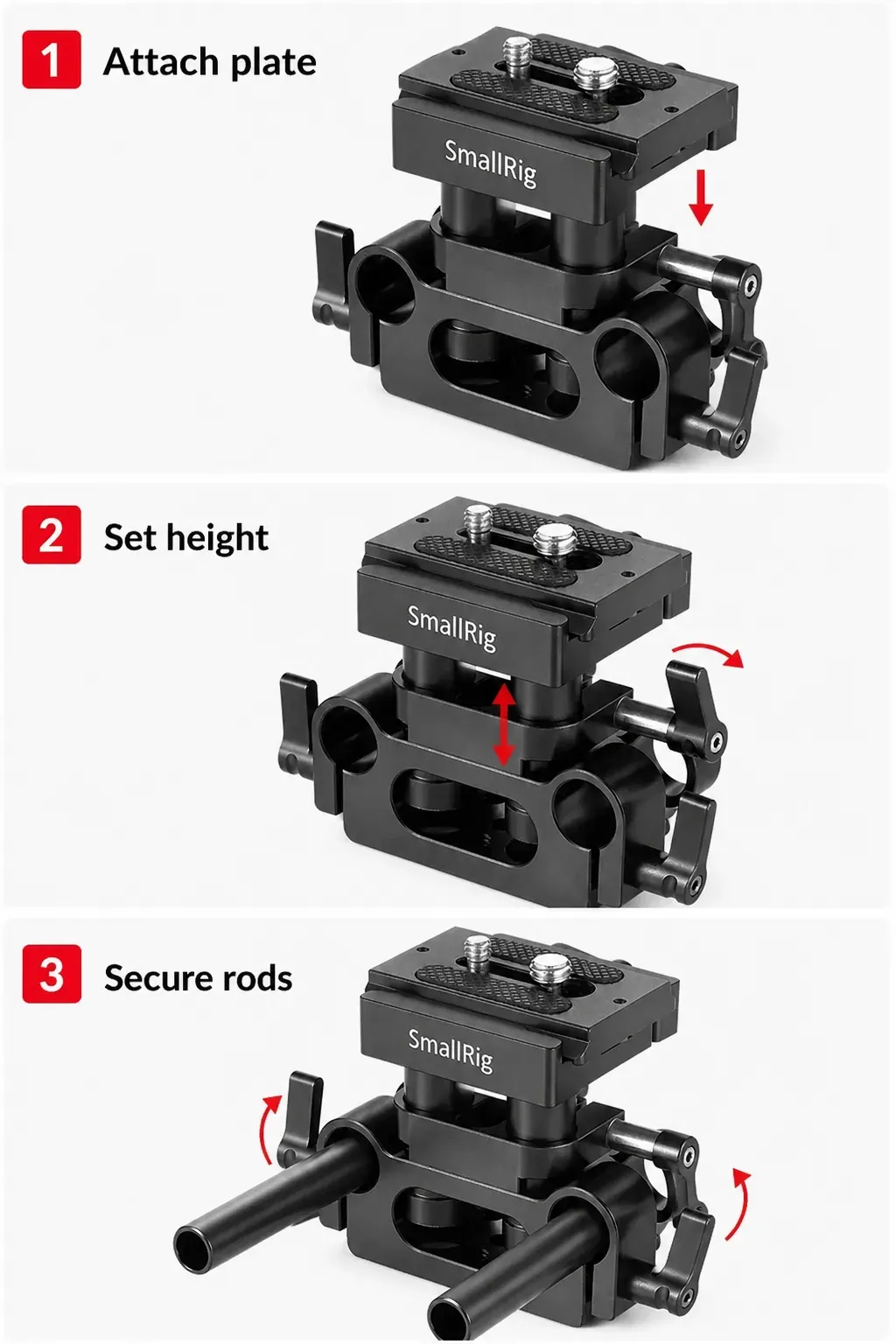
A DSLR camera rail support base is the foundation of a 15mm rod-based rig. It fixes the camera body in position above two rods, usually spaced to the common lightweight support standard, so that accessories can slide on and align correctly.
In practice, this matters for three main reasons. First, it keeps the lens centre at a usable working height for a matte box and follow focus. Second, it gives a rigid mounting point for lens support when the lens is too heavy to leave unsupported. Third, it makes the whole rig more modular, because rods can carry several accessories without each one relying on the camera body alone.
Based on our testing with typical UK interview, tripod and shoulder-rig builds, the biggest improvement is usually repeatability rather than outright complexity. In other words, a good rail support base helps operators rebuild the same working setup quickly without re-aligning every accessory from scratch.
If you are new to the category, it helps to read this alongside The Ultimate Guide to 15mm Rod Clamp Baseplate in the UK, which explains the wider rod clamp and baseplate format in more detail.
Why does the base matter more than many buyers expect?
Many rig issues blamed on a matte box or follow focus actually begin at the base. If the rods are not held square, if the camera sits too high or too low, or if the clamp flexes under load, accessory alignment becomes inconsistent. Consequently, that can lead to rubbing gears, off-centre matte box openings, lens strain or wasted time on set.
A dependable DSLR camera rail support should make setup predictable. You should be able to rebuild the rig, slide accessories into place and get back to roughly the same alignment without starting from zero.
Why Does DSLR Camera Rail Support Still Matter in the UK?
DSLRs remain in use across UK video production, education, events and independent filmmaking, even as mirrorless systems continue to grow. Plenty of operators still use Canon EOS, Nikon and older hybrid bodies for locked-off interviews, training content, local commercial work and lower-cost multicamera setups.
That matters because rail support is not about fashion. Instead, it is about mechanical alignment. Whether you are filming branded content in Manchester, interviews in a London office, or documentation work for public sector teams, accessory alignment still needs to be repeatable.
There is also a practical UK purchasing angle. Buyers here tend to look closely at system compatibility, VAT-inclusive pricing, shipping times, replacement part availability and whether a support standard fits existing kit rather than forcing a full rebuild. Therefore, a rail support base that works with standard 15mm rods is often the least disruptive upgrade.
What does the wider camera market tell us?
The camera hardware market remains substantial, which helps explain why support accessories continue to matter. According to the Camera & Imaging Products Association (CIPA), global shipments of interchangeable-lens cameras reached 7.72 million units in 2023 across mirrorless and DSLR categories combined. That does not measure UK rigs directly; however, it is a useful indicator that the installed base for lenses, support gear and modular camera accessories remains large.
According to UK purchasing norms for production kit, buyers also tend to prioritise compatibility and serviceability over novelty. As a result, support systems built around common 15mm standards remain relevant for working rigs already in circulation.
What Are the Main Parts of a DSLR Camera Rail Support System?
When UK buyers search for DSLR camera rail support, they are often looking at one product image and several overlapping terms. Breaking the system into parts makes the choice easier.
What is the baseplate or support base?
This is the central platform that attaches to the camera and holds the rod clamps. It determines camera position, rigidity and overall mounting logic.
What do 15mm rods do?
These carry the accessories. The 15mm lightweight standard is widely used because it is compact, common and easy to expand. Rod length should match the intended setup. For example, a short front section may suit a basic follow focus, while a matte box and lens support often need more usable rod length.
Why are rod clamps important?
These secure the rods in place. A clamp must hold rods firmly without excessive play. If a clamp loosens under normal handling, the whole support system becomes unreliable.
What should you check on the camera mounting interface?
This may be a direct screw mount, a quick-release arrangement, or a plate-based system that integrates with tripod workflows. If fast transitions matter, compare your options with Arca Quick Release Baseplate Explained: A UK Buyer's Guide.
What is the accessory alignment path?
This is not a separate part, but it is the reason the system exists. Once the camera is fixed, accessories can be mounted and aligned along the rods using a shared centre line.
Who Needs DSLR Camera Rail Support?
Not every DSLR setup needs rods. A small body with a lightweight lens for stills or simple handheld video may not benefit much. However, rail support becomes worthwhile when the rig has to carry load or hold alignment over repeated use.
Who should strongly consider a DSLR camera rail support?
- Operators using follow focus units that need stable gear mesh
- Filmmakers using matte boxes that must sit square to the lens
- Shooters working with heavier zooms, cine-modified lenses or adapted lenses needing extra support
- Teams using external accessories around a repeatable interview or studio setup
- Tripod-based rigs that are rebuilt regularly between locations
When is it especially useful?
It is especially useful when consistency matters more than absolute compactness. For instance, if you move between office interviews, event coverage and controlled indoor shoots, a DSLR camera rail support helps keep the rig modular without rebuilding the alignment logic each time.
Based on our testing, the benefit becomes clearer as soon as a rig carries more than one front-mounted accessory or a lens that adds noticeable strain to the camera mount.
How Do You Choose the Right DSLR Camera Rail Support in the UK?
The right choice depends less on branding and more on fit with the rest of your rig. Therefore, UK buyers should start with compatibility, working height and mounting method before thinking about secondary features.
Is it compatible with standard 15mm rods?
Check rod diameter, spacing and support format. Most DSLR and hybrid rigs use the common 15mm lightweight standard, and that keeps expansion easier with third-party accessories already sold in the UK.
Does the centre height suit your accessories?
Lens height relative to the rods affects matte box alignment, follow focus position and lens support fit. If the camera sits too high or too low, the whole system becomes awkward even if the base itself is well made.
How much weight and leverage will the rig carry?
A light prime lens makes fewer demands than a longer zoom, adapter stack or cine-style front end. Consequently, base rigidity and clamp quality matter more as front weight increases.
Do you need quick release for tripod work?
If you regularly switch between handheld, tripod and slider setups, a quick-release compatible base can save time. In contrast, a fixed screw-only setup may be slower but perfectly adequate for static studio use.
Will it work with your existing plates, cages and heads?
For many UK buyers, this is the real decision point. A DSLR camera rail support should fit into the kit you already own, not create a chain of extra purchases just to make one base usable.
What Problems Can a DSLR Camera Rail Support Help Prevent?
A good base does more than hold rods. It also helps prevent recurring rig problems that slow down production or put stress on equipment.
- Inconsistent follow focus gear engagement
- Matte boxes sitting off-centre to the lens
- Lens mounts carrying too much unsupported front weight
- Rigs that need full re-alignment after transport
- Tripod balance issues caused by poor accessory placement
According to general UK production safety practice, reducing strain on mounted equipment and avoiding unstable builds is simply good workshop discipline. While a rail support is not a substitute for careful rigging, it does provide a more controlled starting point.
Is DSLR Camera Rail Support Worth It?
Yes, if your DSLR or hybrid video rig uses rod-mounted accessories, heavier lenses or repeatable production setups, DSLR camera rail support is usually worth it. It improves alignment, helps support front-heavy lenses and reduces rebuild time, especially for UK users working across interviews, events and commercial shoots.
If your setup is minimal and stays lightweight, you may not need it yet. Nevertheless, once you add a follow focus, matte box or lens support, a proper 15mm base quickly becomes one of the most useful parts of the rig.
At UniVerail, we approach the category from a practical rig-building perspective: build around standard 15mm support, maintain alignment, and avoid unnecessary rework on set. That is ultimately what most buyers are searching for when they look up DSLR camera rail support.
Ready to build with UniVerail?
Shop Now — £93.99